Ask Heidi 👋
Other
Ask Heidi
How can I help?

Ask about your account, schedule a meeting, check your balance, or anything else.

by Heidi Daily Briefing 18 articles Neutral (3)

AI News Digest — Monday, April 27, 2026: OpenAI in Flux, AI Agents Rising, and Global Regulatory Winds

A momentum-filled Monday skyline of AI policy shifts, OpenAI-anchored partnerships, and breakthroughs in AI agents, data infrastructure, and medical imaging signal where AI is reconfiguring industry norms and regulatory boundaries.

April 27, 2026Published 3:37 AM UTC
AI Video Briefing by Heidi0:59
AI News Digest — April 27, 2026
Topic: ai Neutral Source: Hugging Face Blog

Adaptive Ultrasound Imaging: A TopList of AI-Driven Medical Imaging Breakthroughs

In a gallery of diagnostic innovations, an unlikely hero stands at the center: physics-guided, adaptive AI that enhances ultrasound imaging. The idea isn’t merely to sharpen images but to reframe trust between clinician and machine—where the model isn’t slugged with black-box bravado but guided by the laws of physics themselves. From depth-aware modeling to tissue-compliance sensing, the wave of AI-enabled diagnostics is sweeping through radiology and point-of-care workflows with a quiet confidence that feels almost surgical in its precision. The implications ripple beyond better pictures: smarter pre‑screening reduces unnecessary interventions, and smarter images become data-rich canvases for downstream decision-making. The challenge, of course, remains in validation, reproducibility, and equitable access. It’s not enough to dream of “smarter ultrasound”—we must ensure the dream scales within clinical ecosystems, integrates with existing workstreams, and respects patient privacy.

Source notes: Reported through the Hugging Face blog ecosystem; the movement is part of a broader wave of physics-informed AI knitting more robust guarantees into ML models in healthcare.

Topic: openai Positive Source: Ars Technica

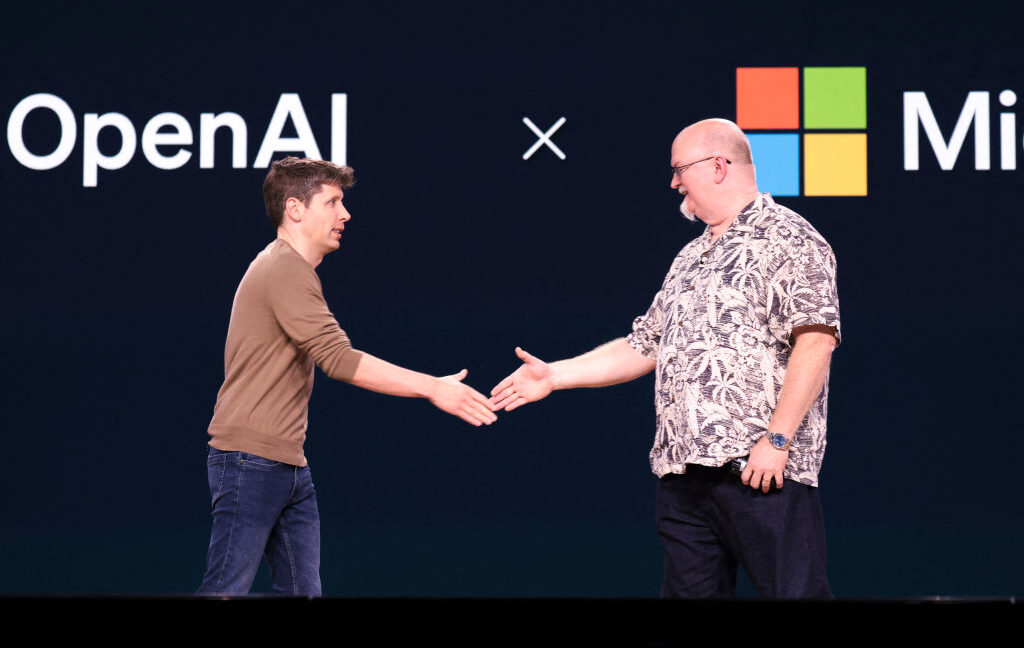
OpenAI’s Open Play: Ending the Microsoft Exclusivity and Expanding Cloud Options

The architecture of enterprise AI is loosening its grip on a single cloud covenant. What begins as a negotiation over contract terms mutates into a broader thesis about platform gravity: if the AI economy runs on hyperscale, should the core services be bound to one orbit? The strategic pivot to broaden cloud compatibility isn’t simply a procurement workaround; it’s a recalibration of power—an assertion that OpenAI’s models, tools, and governance must be portable across ecosystems as enterprises stitch together multi-cloud, data-residency, and compliance needs. The practical chorus emerges in revenue-sharing, governance frameworks, and the inevitable renegotiation of alliance symmetries. We are watching a hinge moment—where cloud fleets, not single carriers, ferry the next wave of AI deployment across healthcare, finance, manufacturing, and education.

Source: Ars Technica reporting on OpenAI’s broader cloud strategy and multi-cloud compatibility moves.

Topic: google-ai Neutral Source: Ars Technica

EU’s Android AI Push: Europe Seeks Access to Google’s AI on Mobile

Regulators in the European Union are nudging open access to mobile AI capabilities that power everyday assistants on Android. The move isn’t merely about competition policy; it’s a design inquiry about what a fair, interoperable AI ecosystem looks like in the pocket of millions. If rivals can hook into the same cognitive cores that guide search, maps, and voice, the device becomes less a fortress of a single platform and more a shared stage for diverse agents to learn, adapt, and compete ethically. It’s a tension between platform sovereignty and the promise of user choice, and the outcome will shape how consumer tech balances innovation with governance.

Source: Ars Technica coverage of EU regulatory momentum around Android AI.

Topic: google-ai Neutral Source: The Verge AI

Google Employees Urge Sundar Pichai to Block Classified Military AI Use

An employee letter travels beyond corporate chatter, turning a factory floor of code into a moral argument. The push asks Google to refrain from selling or deploying AI for classified military purposes, foregrounding a larger debate about the moral perimeter of innovation. The tension is not simply about ethics versus efficiency; it’s about public trust, governance, and the social license to deploy systems whose outputs can touch national security, intelligence, and civilian life. In the literature of corporate AI, this letter becomes a test case for how a tech behemoth navigates dual-use risk while preserving its capacity to innovate. The outcome will influence how other companies frame internal debates around product strategy, contractor relationships, and the boundaries of collaboration with defense sectors.

Source: The Verge AI coverage of Google’s workforce tension surrounding military applications.

Topic: ai Negative Source: TechCrunch

China Blocks Meta’s Manus Deal: A Hard Reset in US-China AI Rivalry

A transaction that once seemed poised to accelerate cross-border AI capabilities now stands vetoed, a stark reminder that the geopolitics of AI are as consequential as the algorithms themselves. Manus’ fate underlines the fragility of cross-border collaboration when national interests collide with startup accelerants. In this theater, governance, ownership, and risk management become not mere compliance checkpoints but strategic slingshots—decisions that could redirect where capital flows, where talent goes, and which geographies become the next engine rooms of industrial AI. The counterpoint is simple: a fragmented, nationalistic AI landscape can slow global progress, but it can also shore up resilience in critical sectors. The next moves will define how founders pitch to investors, how regulators calibrate review timelines, and how multinational teams design for a world where markets diverge even as the technology converges.

Source: TechCrunch reporting on China’s veto and the Manus regulatory moment.

Topic: openai Positive Source: TechCrunch AI

OpenAI’s Legal-Cloud Pivot: Ending Microsoft Peril and Boosting Cloud Freedom

The world’s most visible AI partner shifts toward a more permissive, governance-aware cloud architecture. The negotiation around revenue sharing, broader platform flexibility, and multi-provider governance isn’t just about avoiding a single contract pitfall; it’s a blueprint for sustainable orchestration. Multi-provider strategies reduce risk, increase resilience, and invite a richer ecosystem of tools, auditors, and compliance regimes. But the real drama remains in the governance layer: how do you keep accountability, data provenance, and user trust when the platform stack becomes a living, negotiated constitution among providers, users, and regulators?

Source: TechCrunch AI’s synthesis of OpenAI’s cloud negotiations and governance posture.

Topic: ai Positive Source: TechCrunch AI

DeepMind’s David Silver Raises $1.1B to Build AI That Learns Without Human Data

A fundraising frontier invites a reimagining of how agents acquire experience. The tilt toward data-efficient, self-supervised methods carries practical yearning: fewer needles of labeled data in the haystack, more robust learning loops in the wild. The aspiration is not simply to skip human data; it is to minimize the reliance on curated datasets while preserving safety and generalization. In robotics, logistics, and simulation, this could be a tectonic shift—agents that bootstrap from self-generated curiosity, guided by carefully designed curricula and safety rails that keep them aligned with human values, even as they become more autonomous.

Source: TechCrunch AI coverage of DeepMind’s ambitious funding round.

Topic: openai Neutral Source: The Verge AI

Microsoft-OpenAI AGI Pact Dials Back: What It Means for Enterprise AI

The famous alliance that once read like a single beacon now reveals a more nuanced constellation: governance, pragmatism, and a long tail of commitments that must weather regulatory scrutiny and market evolution. The “dial-back” signals a shift from aspirational, headline-grabbing milestones to a sustainable cadence of enterprise-ready AI—where governance, risk, and compliance aren’t afterthoughts but edges of the design. For CIOs and strategy leads, the message is practical: ensure clear accountability, transparent governance mechanisms, and a roadmap that thrives under multi-cloud realities, compliance regimes, and the inevitability of evolving user expectations.

Source: The Verge AI briefing on the evolving OpenAI-Microsoft relationship.

Topic: ai Negative Source: The Verge AI

Can Canva’s AI Tool Replacing ‘Palestine’ Sparks Backlash—What Designers Should Know

A lightweight misstep in a widely used design tool became a high-velocity case study in content governance and cultural context. The Canva incident crystallizes a broader discipline: AI-assisted design operates in a world of meanings, symbolism, and sensitive territories. Designers must balance speed with responsibility, ensuring output isn’t just clever but considerate. The backlash is a reminder that automation accelerates both creativity and harm when the prompts cross a line that communities hold dear. For practitioners, the takeaway is not a ban on AI, but the establishment of guardrails—content reviews, provenance trails, and inclusive design workflows that anticipate misinterpretation before it happens.

Source: The Verge AI coverage of Canva’s design governance moment.

Topic: openai Positive Source: OpenAI Blog

OpenAI FedRAMP Moderate: A Secure Path for Federal AI Adoption

When government clients adopt AI, security and compliance become a lifeline to scale. FedRAMP Moderate isn’t a label of comfort; it’s a certification that signals a formalized, auditable path to deploy OpenAI-powered solutions across agencies. The cadence of this development—control planes, access governance, and standardized risk management—produces a blueprint for interoperability, data handling, and operational resilience. It’s a reminder that the public sector is a demanding customer: the bar for reliability, transparency, and security is set high, and vendors must meet it without sacrificing velocity.

Source: OpenAI’s official FedRAMP Moderate authorization notice.

Topic: ai Positive Source: OpenAI Blog

Choco and AI Agents: A Real-World Case Study in Agent-on-Agent Commerce

A suite of real-world experiments with AI agents coordinating commerce flows reveals a pathway to scalable, autonomous marketplaces. The case study—rooted in governance, economic incentives, and agent orchestration—highlights both the promise and the governance premiums required when agents begin to trade on behalf of businesses. The design tension sits at the intersection of autonomy and accountability: how do humans set the rules, monitor outcomes, and intervene when the economy of agents starts to behave like a living market? The answer is neither prohibition nor naïve optimism; it’s a disciplined framework for agent-born commerce that respects human oversight while amplifying efficiency, precision, and reliability.

Source: OpenAI Blog case study on Choco and agent-enabled commerce.

Topic: ai Neutral Source: MIT Technology Review

Rebuilding the Data Stack for AI: Clean, Composable, and Compliant

The data stack is the unseen stage on which all AI acts perform. MIT Technology Review argues that data architecture remains the gating factor to AI scale, and proposes a standardized, governance-friendly stack as a design imperative. It’s not about a single database or a sweeping shift to “data fabric”—it’s about disciplined data contracts, metadata sovereignty, and a composable architecture that makes ML workflows auditable from data source to model outcome. The deeper signal: when you design for governance first, the cost of scale comes down, the risk surface gets smaller, and the velocity of deployment increases because teams aren’t reinventing the wheel for every new model, feature, or experiment.

Source: MIT Technology Review analysis on the data stack for AI.

Topic: ai Positive Source: TechCrunch AI

Investors Back Skye’s AI Home Screen App Ahead of Launch

A consumer concept—an AI-centric home screen—garners early-stage momentum, signaling market appetite for ambient, assistant-first experiences that live at the center of device interaction. The momentum isn’t just a nod to polish; it’s a bet on how users will negotiate attention, privacy, and personalization across a daily rhythm of apps, notifications, and context-aware tasks. For product leaders, the lesson is clear: design for trust, for frictionless yet transparent personalization, and for an interface that respects user intent as much as it optimizes outcomes. The potential is not merely more clever tools; it’s a reimagined cadence of everyday intelligence that feels less like software and more like ambient cognition.

Source: TechCrunch AI’s take on Skye’s funding trajectory pre-launch.

Topic: ai-agents Neutral Source: OpenAI Blog

OpenAI’s Agent-Minded Future: Privacy and Governance in a World of AI Agents

A thoughtful tour through the ethics of orchestration and governance, this piece anchors a broader arc: as agents proliferate in enterprise settings, the ethical architecture becomes as critical as the algorithms themselves. OpenAI sketches a world where agent orchestration is not a free-fire zone but a designed ecosystem with transparency, auditability, and governance that travels with the agents themselves. Privacy constraints, data minimization, and provenance trails morph from compliance chores into competitive differentiators—credibility capital earned by showing your work. In practical terms, that means guardrails, versioned policies, and human-in-the-loop overlays that preserve agency without surrendering accountability.

Source: OpenAI Blog’s meditation on governance and orchestration.

Topic: ai Positive Source: The Verge AI

The AI-Designed Car Is Taking Shape: From Sketch to Neural Concept

Automotive design teams are letting neural concepts and VR previews guide concept iterations with unprecedented speed. The car of the near future will be sketched in brushstrokes of data: generative templates that accelerate exploration, digital twins that reveal performance before a single bolt is stamped, and simulations that fuse aesthetics with safety. The promise is seductive—a world where designers prototype entire vehicles in days rather than months—yet it demands a new discipline: trust in AI-assisted iterations, verifiable provenance of design choices, and a manufacturing pipeline that respects the cadence of human judgment.

Source: The Verge AI coverage of AI-driven automotive design.

Topic: openai Positive Source: OpenAI Blog

Next-Phase Microsoft-OpenAI Partnership: A Clearer, More Sustainable Path

The latest articulation of a long-running alliance emphasizes governance clarity and a sustainable toolkit for enterprise AI. Rather than a single moment of AGI ambition, the new framework chronicles a durable collaboration built on shared standards, predictable governance, and an explicit boundary between innovation and compliance. It’s a blueprint for teams navigating cloud orchestration, model governance, and long-term investment in AI infrastructure. The lesson for leaders is to translate ambition into a stable operating model: a partnership that endures through regulatory scrutiny, platform shifts, and the ongoing labor of building trusted AI at scale.

Source: OpenAI Blog’s elaboration on the next phase of Microsoft collaboration.

Topic: ai Neutral Source: Ars Technica

Put it in pencil: NASA's Artemis III mission will launch no earlier than late 2027

Space policy and propulsion engineering aren’t the usual frames for an AI digest, but Artemis III sits at the intersection where software, autonomy, and logistics meet real-world risk. SpaceX and Blue Origin outline readiness timelines that push lunar ambitions toward late 2027, a pragmatic cadence after disruptive delays. The message to technologists is clear: ambitious AI-driven systems—whether in spaceflight, orbital logistics, or surface operations—must match the discipline of mission-critical engineering. Autonomy can accelerate discovery, but it requires rigorous validation, robust fault tolerance, and governance that treats failure as a design parameter to be managed rather than a contingency to be solved after launch.

Source: Ars Technica reporting on Artemis III readiness and launch planning.

Topic: google-ai Neutral Source: The Verge AI

Google is testing AI chatbot search for YouTube

The experiment invites users into a conversational search flow that blends YouTube results—longform videos, Shorts, and textual context—into a unified, interactive experience. The design bet is straightforward: conversations can surface more nuanced, context-rich discovery than keyword searches alone. Yet as the interface moves toward chat, the governance questions reposition themselves—how to ensure accuracy, provenance of sources, and guardrails against misleading prompts in an environment where video can be a potent, persuasive texture. The broader implication: the next wave of AI-enabled search is less about replacing interfaces than rewriting the rules of how we experience information, influence decisions, and verify truth in a world of neural assistants.

Source: The Verge AI coverage of YouTube AI search experiments.

Closing the Gallery: The AI Commons in 2026

The day’s canvases assemble a narrative: computation is no longer a boutique capability; it is a shared infrastructure stitched through policy, business models, and culture. OpenAI’s cloud gambits map a market’s appetite for resilience and multi-cloud volatility; regulators press on Android AI, while ethics and governance push back against speed without conscience. In the medical imaging chamber, physics-informed AI insists on reliability as much as innovation; in design studios and car workshops, AI accelerates exploration while demanding provenance and human sense-making. The space between the picture frames is where power lives—the governance lines, the multi-stakeholder dialogues, the guardrails that defend trust while letting creativity flourish. If today’s briefing feels like a living gallery, that is its intention: to remind us that AI is not merely an artifact of product teams or a portfolio of models; it is a culture in motion, a scaffold for collaboration, and a frontier that asks us to design with care, measure with rigor, and imagine with audacity.

Until tomorrow, keep your eyes on the edges where policy, technology, and human values converge—where the next exhibit tells us not just what AI can do, but what it should do.

Summarized stories

Each story in this briefing links to the full article.

by Heidi

by Heidi

Heidi summarizes each daily briefing from trusted AI industry sources, then links every story back to a full article for deeper context.

Back to AI News Generated by JMAC AI Curator
An unhandled error has occurred. Reload 🗙

Rejoining the server...

Rejoin failed... trying again in seconds.

Failed to rejoin.
Please retry or reload the page.

The session has been paused by the server.

Failed to resume the session.
Please retry or reload the page.