
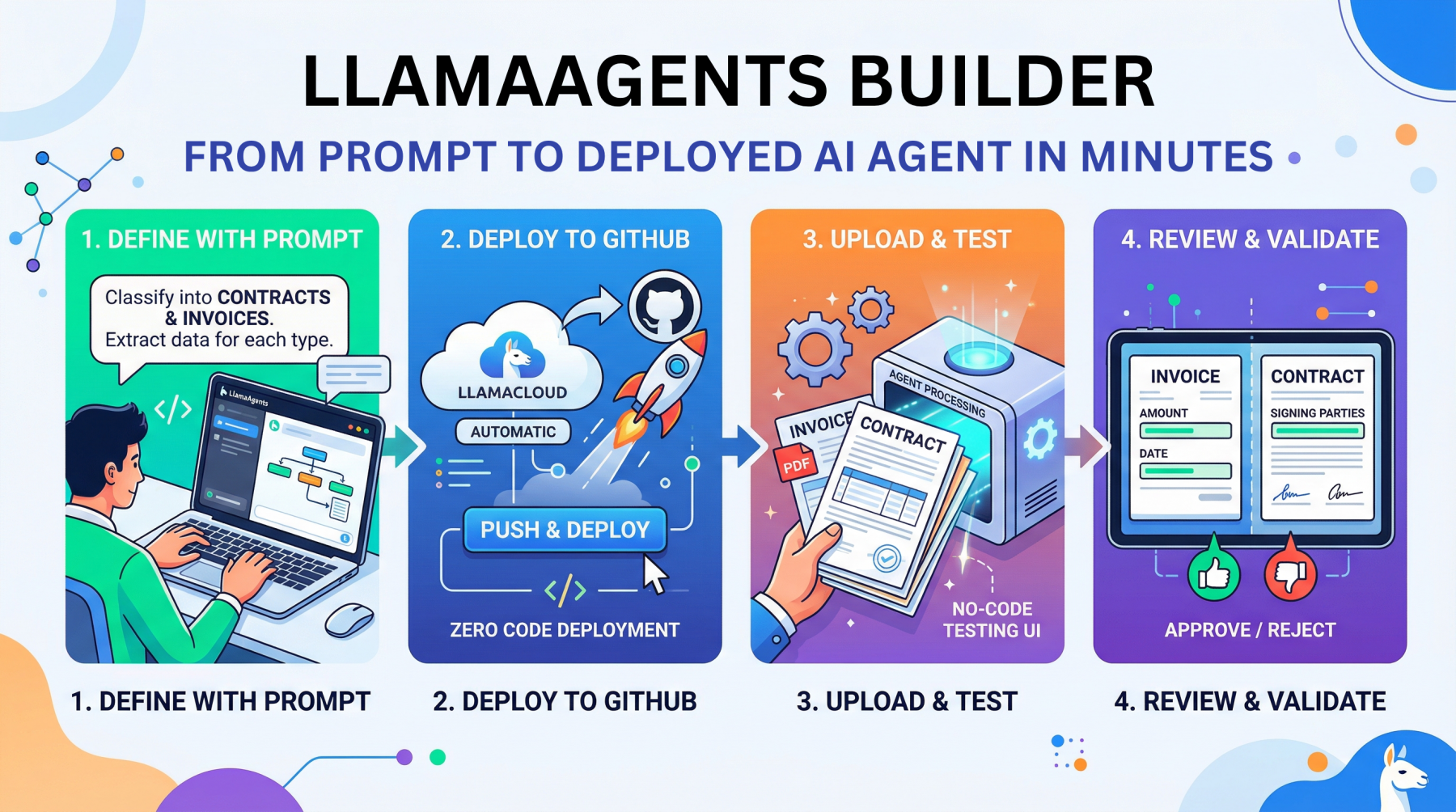
Agent-building in minutes
The Machine Learning Mastery piece spotlights how LlamaAgents Builder lowers the barrier to deploying autonomous agents. The tool enables users to convert prompts into fully functioning agents that can perform tasks such as document analysis and automated data processing. This capability is significant in the broader context of AI agents, which are increasingly positioned as practical, business-ready tools rather than academic curiosities. The builder streamlines orchestration, reducing hand-engineering and integration work that typically slows adoption of agent-based workflows.
From a technical standpoint, the value lies in the ability to define agent goals, specify tasks, and deploy them with less friction. This democratization of agent development accelerates experimentation and operationalization, enabling teams to prototype workflows that previously required substantial software engineering effort. It also raises considerations around safety, governance, and monitoring: agents operating on real-world data via connected services must be auditable, with clear failure modes and robust access controls to prevent data leakage or unintended actions.
Strategically, the rise of builder-enabled AI agents signals a shift toward composable capabilities—agents that can be plugged into existing systems, APIs, and data streams. This modular approach can foster rapid experimentation while encouraging organizations to adopt standardized interfaces for agent orchestration. However, as agent complexity grows, so too does the need for governance that tracks decision rationale, ensures accountability, and maintains alignment with business objectives and ethical norms.
In summary, LlamaAgents Builder embodies a practical step toward scalable agent deployment, highlighting a near-term path for turning AI ideas into executable, value-generating processes with safer, auditable governance baked in from day one.