
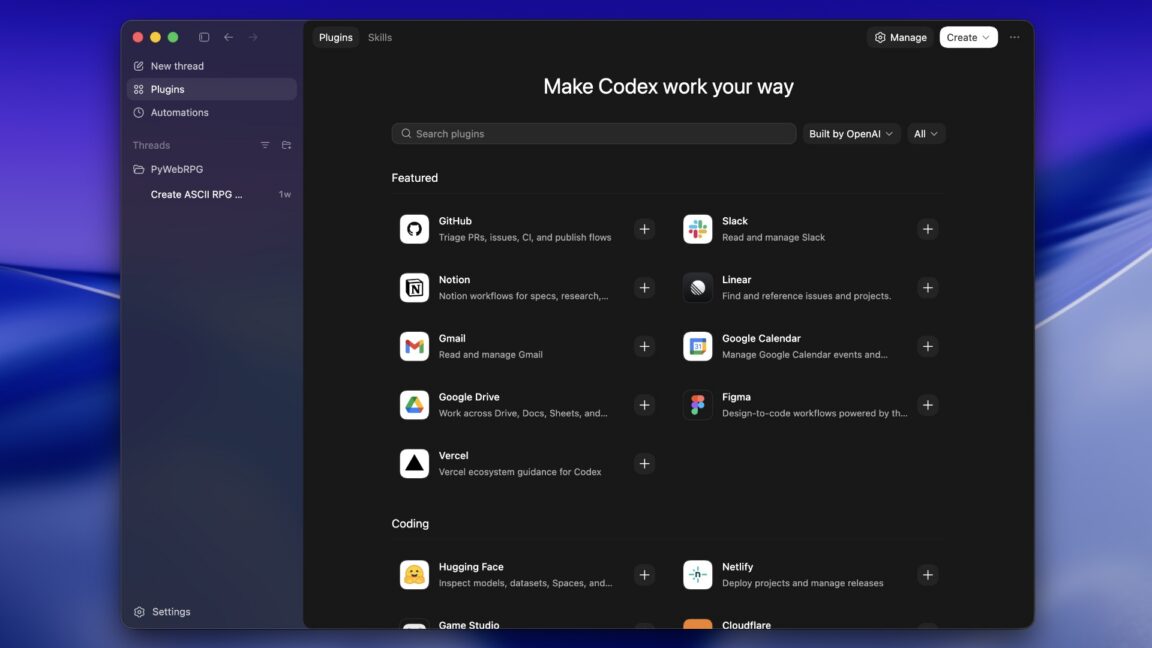
Plugin-enabled coding
Ars Technica reports that OpenAI is expanding Codex with a plugin ecosystem, bridging code generation with dynamic tooling and external services. This evolution widens Codex’s utility beyond traditional code completion, enabling developers to query databases, manage infrastructure, and orchestrate multi-step tasks through natural-language prompts. The move is consistent with a broader MCP (model-connected product) strategy that treats AI models as orchestration layers across software ecosystems, not as isolated code generators.
Economically, plugin support can accelerate developer adoption by reducing context-switching, enabling more seamless integration into existing toolchains, and offering more robust, enterprise-grade capabilities. For competitors, the plugin approach raises the bar for interoperability and safety, as plugin ecosystems introduce new vectors for data handling, access control, and governance oversight. The architectural challenge is to ensure plugin safety while preserving the flexibility that makes Codex attractive for experimentation and rapid prototyping.
From a strategic perspective, this move signals OpenAI’s intent to position Codex as a core gateway in developer workflows, embedded into IDEs and services through a vibrant plugin marketplace. It also foreshadows stronger competition with Claude Code and other code-oriented models, as the plugin framework enables rapid feature expansion and tighter integration with cloud services and collaboration platforms. For users, the payoff is more capable, context-aware code assistance that can bootstrap projects faster, while still requiring disciplined security and code review practices.
In short, the Codex plugin expansion marks a maturation phase for AI-assisted development. By embedding Codex into a plugin-enabled, interconnected ecosystem, OpenAI is laying the groundwork for a more integrated, efficient, and extensible developer experience—one that blends language understanding with practical tooling to drive real-world productivity and innovation.